 CEDS
CEDSSummary Background Land, Resources & Culture
Energy & Mineral Resources
Powering the Present, Shaping the Next Economy
Trace the region’s oil, gas, potash, nuclear fuel, renewable power, and carbon-management assets through their jobs, infrastructure, and stewardship needs.

The Landscape That Shapes Us Energy & Mineral Resources
Energy & Mineral Resources: Powering the Present, Shaping the Next Economy
Lea and Eddy’s Delaware Basin production, Carlsbad’s potash district, and Eunice’s operating uranium-enrichment facility give Southeastern New Mexico an industrial base with national reach. Wind, solar, storage, and carbon-management proposals add different possibilities. Each asset sits in a separate market and regulatory setting, yet all draw on the region’s workers, land, water, power, roads, and suppliers.
The question is where the region can retain more value while meeting those practical demands. The evidence below distinguishes operating activity from proposed projects, separates a resource from a deliverable utility connection, and asks what a local firm or worker could do next. Dated production and facility measures are labeled; a project’s current status should be checked with its operator and regulator.
Oil and Natural Gas
The Delaware Basin’s value runs through gas handling, power, services, roads, and skilled work as well as production.
EIA estimates that Lea and Eddy counties together accounted for 52% of the increase in U.S. crude oil and lease condensate output from 2020 to 2024. This is a share of growth, not a share of total U.S. production.
How the Regional Energy System Works
A producing well is only the first point in a longer system. Gas and liquids must be gathered, treated or processed, transported, and sold. Every step depends on technicians, logistics, reliable utilities, land access, and regulatory compliance. The economic opportunity for Southeastern New Mexico is to help local firms and workers participate in more of that chain—not merely to host extraction.
- ProductionLea and Eddy well sites and field crews
- Gathering & TreatmentPipelines, compression, gas handling, and emissions control
- Processing & TransportPlants, truck and pipeline connections, and monitoring
- Regional BenefitsSuppliers, wages, tax base, and public services
Where the Value Reaches Communities
Field activity buys a wide range of local services. Fabrication, repair, electrical work, instrumentation, trucking, environmental monitoring, and professional support offer paths for existing small firms to move into higher-value contracts. That requires procurement visibility, safety credentials, and training that fit real employer needs.
Local Suppliers
Supplier-development work can help qualified local firms find bid opportunities and meet technical, insurance, and safety requirements.
Skilled Careers
Electrical, process, instrumentation, maintenance, and environmental roles can connect energy employers with colleges and apprenticeships.
Public Capacity
Revenue and private investment can help support services, but volatile prices mean roads, housing, and utilities should be planned for long-term affordability.
Growth Has a Footprint
Production places real demands on roads, power systems, water management, housing, and emergency response. Gas capture and treatment, leak detection, and equipment standards affect air quality and project cost. New Mexico’s Ozone Precursor Rule applies to sources in the producing region; its presence makes compliance capability part of the region’s industrial competitiveness. Local planning should distinguish a proposed facility from an operating one and test whether utilities and services can support it.
What Progress Would Look Like
Useful measures include local supplier participation, occupation and credential completions, road-safety improvements, gas-handling capacity, and compliance outcomes. The Oil Conservation Division publishes county production and injection data; those figures should be read with their reporting date and should not be used as a substitute for employment, environmental, or community-impact measures.
Potash and Mineral Resources
Carlsbad-area potassium minerals connect an industrial workforce to fertilizer markets and shared land-use decisions.
USGS reports that two companies operated two underground mines and one deep-well solution mine in New Mexico in 2025. The figure describes the state’s potash operations, concentrated in southeastern New Mexico.
What Potash Is—And Why It Matters
Potash is the commercial name for potassium-bearing minerals used in fertilizer. BLM identifies sylvite and langbeinite as the two potash minerals mined in New Mexico. They serve different product markets, but both connect local mineral work to agricultural productivity. Unlike a single construction project, mines and processing facilities support continuing work in operations, maintenance, laboratories, safety, and distribution.
That matters for economic diversification. Commodity markets still fluctuate, but fertilizer demand follows different forces than oil prices. A regional strategy can strengthen the district by supporting its workforce and the firms that maintain and move its products.
From Ore Body to Farm Market
The mineral economy is a connected chain. Extraction method depends on the deposit and facility. Material then needs processing, testing, storage, and transport before it reaches fertilizer manufacturers and growers. Each link presents different requirements for equipment, water, power, and trained workers.
- Locate & ExtractUnderground or solution mining under site-specific conditions
- Process & TestSeparate and prepare a consistent fertilizer product
- Move to MarketUse truck and rail connections with dependable handling
- Apply to AgricultureSupply potassium-bearing inputs to farms beyond the region
Three Regional Opportunities
Industrial Skills
Coordinate process-technology, maintenance, electrical, laboratory, and safety pathways with employers; these skills can also serve other regional industries.
Local Supply Chain
Help area machine shops, transport firms, fabricators, and service companies understand mine procurement needs and qualify for contracts.
Logistics & Product Quality
Improve loading, storage, route reliability, and quality-control capacity where operators document a need and a feasible project sponsor.
These are planning opportunities, not announced projects or promised investments. A local sponsor, business case, and site-specific engineering would be needed before a project advances.
Working Under a Shared Landscape
In Eddy County, potash and oil and gas development can overlap at the surface and underground. BLM’s Designated Potash Area is a framework for managing that interaction on federal minerals. Responsible development calls for coordination around well locations, subsidence, access, water, and future mineral recovery. A project that looks efficient for one industry may impose costs on another if siting is not coordinated early.
Nuclear Fuel
Eunice enrichment is operating; proposed spent-fuel storage raises distinct legal, safety, and community questions.
Urenco USA reported that a fifth new enrichment cascade began production in June 2026 as part of its current capacity program. This is an operator report about an existing facility, not a forecast for a proposed storage project.
An Existing Industrial Anchor
Uranium enrichment is a technical, highly regulated activity. At Eunice, it creates demand for process operations, instrumentation, electrical maintenance, safety, security, and specialized suppliers. Regional workforce programs can connect residents to these occupations while recognizing that hiring, contracting, and security requirements are set by the operator and regulators.
The industry's value to the CEDS is concrete when a skill can be taught, a qualified local supplier can compete, or infrastructure can support safe operations. These are measurable regional tasks; they do not require treating every nuclear proposal as an approved project.
A Different Question: Spent-Fuel Storage
The Holtec consolidated interim storage proposal in Lea County has undergone NRC environmental review. Its legal and operational status should be checked directly with federal and state authorities before any current claim is made. It is not part of the Eunice enrichment operation, and the CEDS should not count proposed storage jobs, revenue, or shipments as existing benefits.
Licensing & Law
Confirm the current federal license, state-law requirements, and any litigation before stating that a facility may proceed.
Transport & Preparedness
Evaluate routing, response capacity, and public information with the authorities that would own those responsibilities.
Community Voice
Document affected residents' questions, local government positions, and any proposed benefit or safety agreement transparently.
What the Regional Strategy Can Do
For the operating enrichment facility, the region can map transferable technical skills and supplier needs. For any storage proposal, the appropriate role is public, evidence-led review of safety, transport, financial obligations, and community impacts. Separating these tracks makes the chapter more credible and helps readers understand what is happening now versus what remains a decision.
Renewable Energy
Wind and solar potential becomes a regional benefit when transmission, siting, operations, and local participation align.
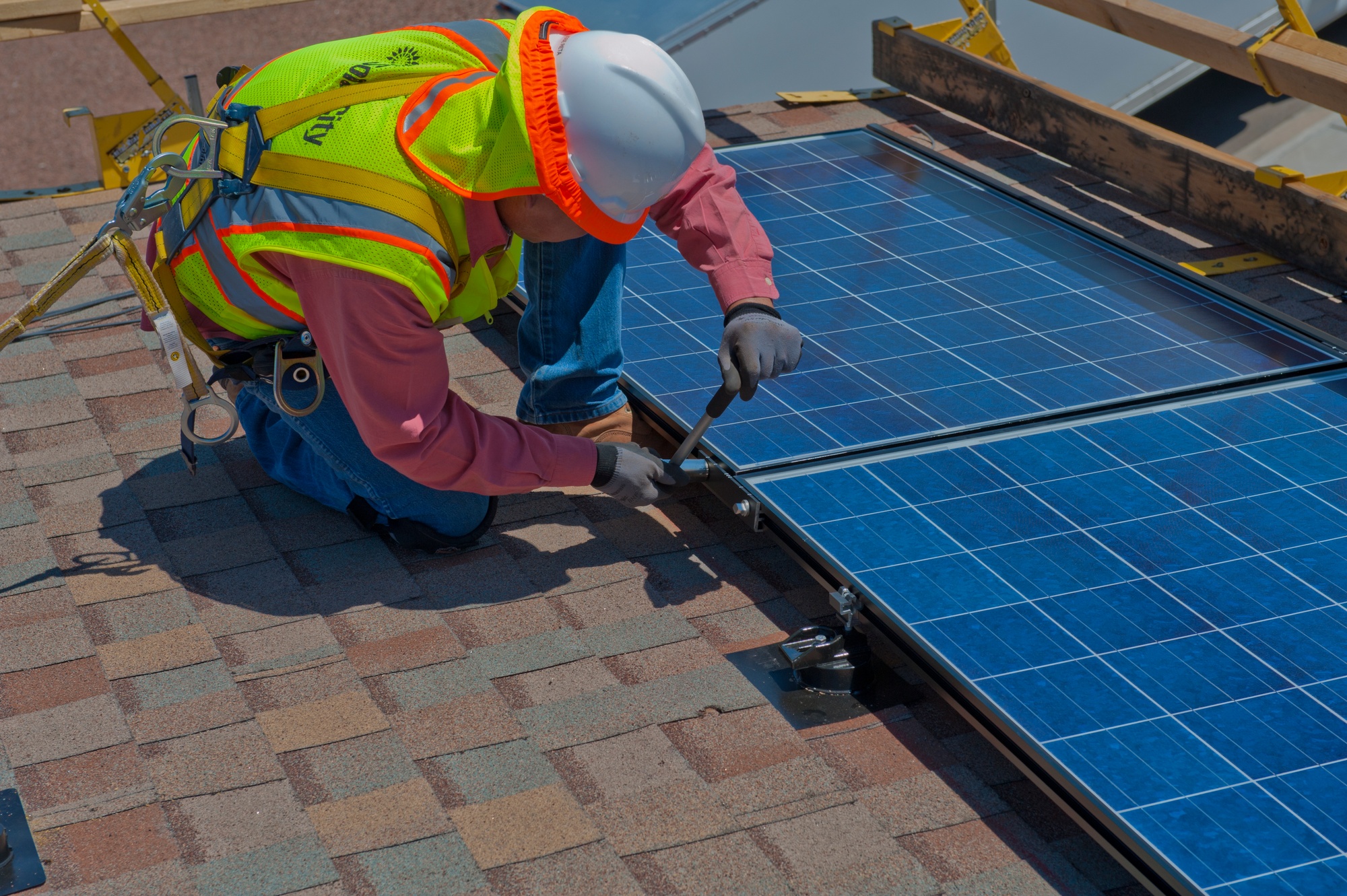
New Mexico’s State Energy Security Plan lists wind and solar facilities in Lincoln, Lea, Chaves, and Otero counties. The list provides examples, not a complete inventory of every current or proposed project.
Read the Resource With the Grid
The high plains and basins offer wind and solar potential, but resource quality alone does not make a project ready. Developers must resolve land access, transmission and interconnection, environmental review, water and road needs during construction, and a buyer for the electricity. Storage may help shift generation across hours, but it also needs a viable connection and operating plan.
The 2025 State Energy Security Plan names facilities such as Red Cloud Wind in Lincoln County, Oso Grande Wind in Lea County, and Buena Vista Solar in Otero County. These examples show that renewable generation already has a regional footprint. They do not imply that every county has the same grid capacity or project economics.
How a Project Becomes a Local Benefit
- Site & CommunityAssess land, habitat, ownership, and neighboring uses
- Grid & BuyerConfirm interconnection, transmission, and offtake
- Build & TrainConnect construction needs with local firms and workers
- Operate & ShareTrack long-term jobs, lease revenue, taxes, and local energy value
Construction can bring short-term spending, while operations generally need a smaller specialized workforce. A credible local-benefit case separates those phases and describes who receives lease payments, public revenue, or more reliable service.
The Portfolio Has Different Scales
Utility-Scale Wind & Solar
Large projects can bring land leases and tax activity, but their timing hinges on transmission, interconnection, and market agreements.
Distributed & Community Energy
Smaller systems can serve buildings or subscribers closer to demand; affordability and access depend on program design and utility rules.
Storage & Flexible Demand
Batteries and flexible loads may improve the value of variable generation, but performance depends on the local grid, duration, and operating economics.
Each scale solves a different problem. Treating them as one interchangeable pipeline would obscure the siting, cost, and community decisions that matter most.
A Readiness Agenda for the Region
Local partners can identify substations and industrial sites, document workforce and supplier needs, and bring landowners and communities into siting discussions early. Project sponsors should disclose the status of interconnection, permits, financing, and power sales before a proposal is described as implementation ready. The CEDS can then track projects by readiness stage and actual local outcomes instead of announced megawatts alone.
Carbon Management
Capture and geologic storage require project-specific geology, monitoring, permits, financing, and public trust.
Three Different Parts of a Potential Industry
Capture equipment separates carbon dioxide from an industrial stream; direct air capture removes it from ambient air; and geologic storage injects it into a formation selected and managed for long-term containment. A project may use one, two, or all three parts. Treating them as synonyms hides major differences in cost, energy use, transport, permits, and jobs.
- CaptureDefine the source and operating energy demand
- TransportIdentify route, ownership, and safety systems
- StorageDemonstrate geology and obtain required well permits
- MonitorTrack performance and long-term responsibility
Where Regional Capabilities Could Apply
Existing field-service firms, geoscientists, drilling crews, equipment suppliers, and monitoring specialists could participate if a project reaches a suitable stage. Their skills are an advantage, but they do not prove that a specific facility has financing, a permit, or a final site. The CEDS should describe potential supplier and workforce pathways as such.
Technical Fit
Assess geology, well integrity, seismicity, pressure, and protection of underground sources of drinking water.
Community Fit
Explain energy, water, land, traffic, and emergency-response needs in terms residents can evaluate.
Business Fit
Name the carbon source, customer or incentive, sponsor, schedule, and measurable local benefit.
A Clear Readiness Screen
Class VI wells for geologic carbon dioxide storage are subject to a specific federal permitting program. EPA's primacy page is the authoritative place to check which authority currently administers a state program; the CEDS should not imply that a state application is an approval. For each prospective project, partners can track the stage of geologic characterization, environmental review, public engagement, financing, permitting, and long-term liability.
What the Evidence Means
Key Insights
Regional implications from the CEDS evidence. A specific project still needs current local measurements, operator records, and community review.
Build Around the Full Value Chain
Oil, gas, potash, enrichment, and renewable projects need technicians, maintenance firms, equipment, logistics, and monitoring. Supplier qualification and career pathways can keep more spending and skills in the region than resource extraction alone.
Treat Readiness as a Site Question
A nearby mineral deposit, generating facility, or pipeline does not prove a parcel is ready. Power, water, access, interconnection, permits, and operating costs should be documented before a project is described as investment-ready.
Separate Existing Jobs From Proposed Benefits
The Eunice enrichment complex is an operating anchor. Spent-fuel storage and carbon-management proposals have different approvals and unresolved decisions. Their potential jobs or revenues should enter a strategy only with a clear status, sponsor, and community process.
Make Stewardship Part of Competitiveness
Gas capture, leak detection, groundwater protection, land coordination, and long-term monitoring affect project durability as well as environmental outcomes. Clear standards and credible evidence can reduce costly surprises for communities and operators.